
trusted partners



Why Take the Container Confidence Quiz?
This isn’t just another IT checklist. It’s a strategic tool designed to help IT leaders and DevOps teams:
- Assess current workloads, automation, and DevOps maturity
- Identify operational strengths and potential gaps
- Get actionable next steps customized to your current container journey
- Receive expert follow-up based on your results
Whether you’re just exploring OpenShift or already deep into hybrid cloud orchestration, this quiz helps chart your next move.
How It Works
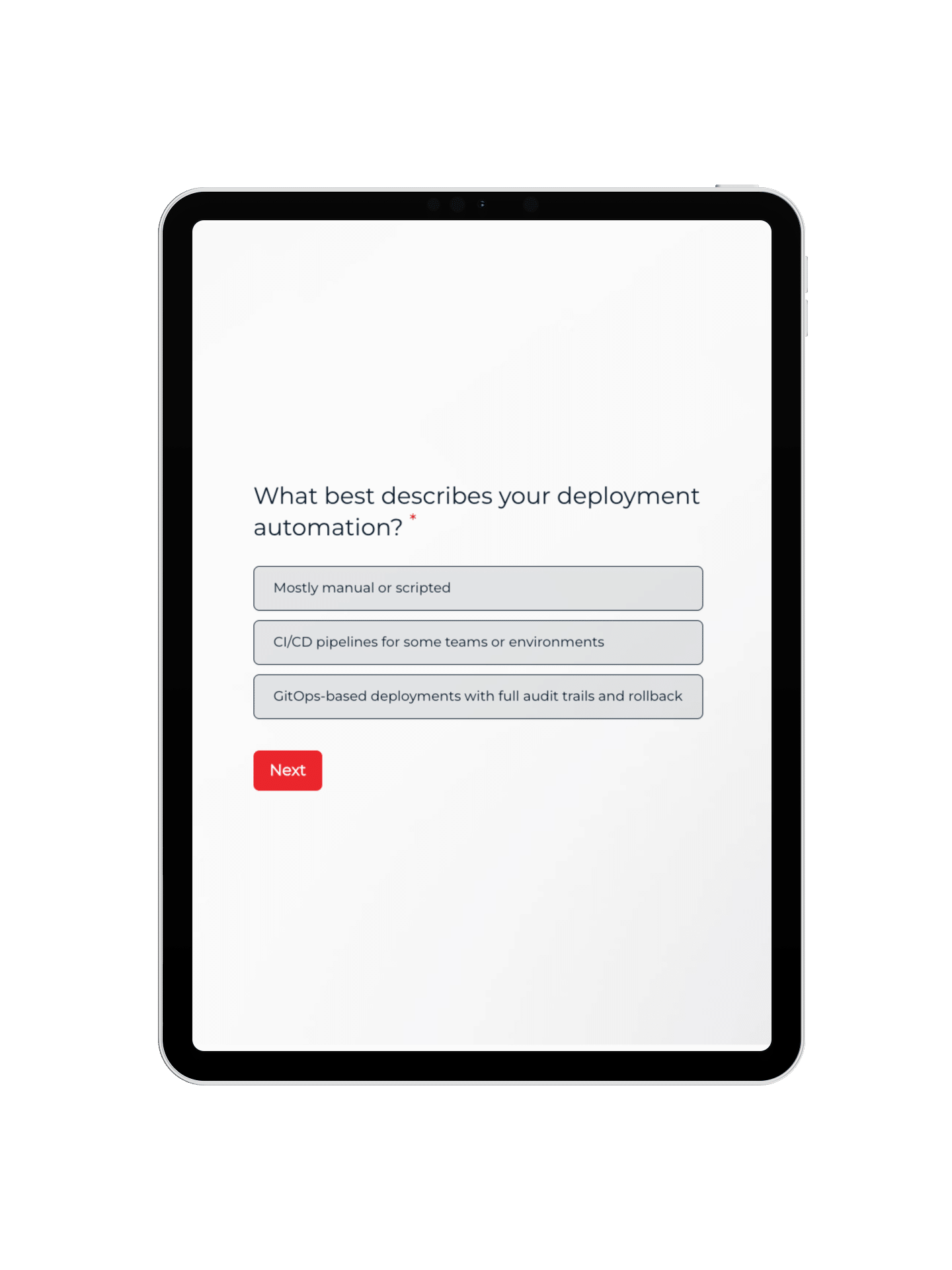
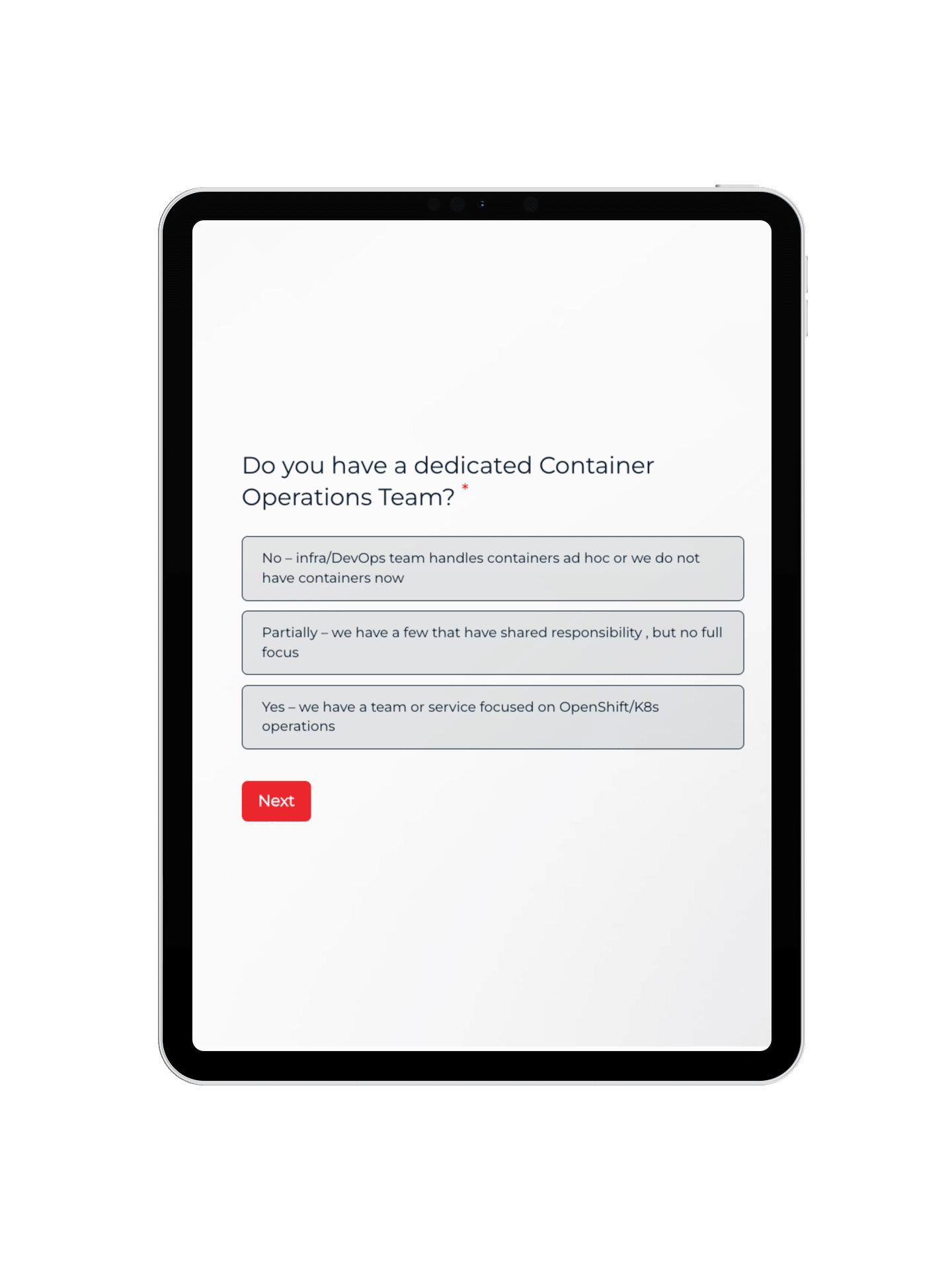
- Answer 10 Quick Questions, Covering topics like automation, governance, Day 2 ops, and platform roadmap
- Get Your Confidence Score, See where you fall:
- Level 1: Not Yet Container Ready
- Level 2: Early Container Adoption
- Level 3: Emerging Container Maturity
- Level 4: Fully Container Confident
- Receive Tailored Recommendations, Plus a follow-up email with insights and options to dive deeper
What Happens After You Take the Quiz?
Taking the Container Confidence Quiz is just the beginning of your container transformation journey. Once you complete the 10-question assessment, here’s exactly what you can expect:
1. Get Your Container Confidence Score, Instantly
You’ll receive a real-time score based on your answers, placing you in one of four levels:
- Level 1: Not Yet Container Ready (0–9 points)
You’re early in your journey, perfect timing to lay a solid foundation with minimal risk and maximum learning. - Level 2: Early Container Adoption (10–17 points)
You’ve started strong, but need clarity and structure to accelerate and scale confidently. - Level 3: Emerging Container Maturity (18–24 points)
You’re ahead of the curve. Small, strategic improvements can unlock major efficiency and ROI. - Level 4: Container Confident (25–30 points)
Your platform is solid. Now it’s time to future-proof and lead the way in innovation.
2. Receive a Personalized Email With Guidance
Based on your score, you’ll receive a custom email packed with:
- Your full score explanation
- Recommended next steps tailored to your organization
- Resources aligned with your maturity level
- Options to engage deeper with our container experts
It’s not a generic follow-up, it’s a strategic blueprint personalized for your team.
Prefer a Conversation?
Let’s talk through your score and explore how Crossvale can support your container journey, from first steps to full-scale maturity.
See Why Our Partners and Clients Recommend Us
"Crossvale not only ensured a seamless transition to OpenShift but also brought accelerators that saved us valuable time and resources."
Chief Technology Officer | Financial Services
"Moving our healthcare applications to OpenShift was a daunting task, especially with stringent compliance requirements. Crossvale stepped in and provided the expertise we needed."
Director of ITHealthcare
"We're now confidently running COTS and our own applications on OpenShift, enjoying rapid ROI. Crossvale was the answer we'd been searching for"
Chief Operations OfficerRetail
Frequently asked questions
PodOps is a managed services platform designed to simplify the deployment, management, and optimization of Kubernetes-based applications, specifically for businesses using Red Hat OpenShift. It provides tools for automating Kubernetes cluster operations, scaling applications, and improving security across cloud environments.
PodOps automates the entire Kubernetes cluster lifecycle, including provisioning, scaling, monitoring, and managing resources. It integrates with DevOps tools to streamline Continuous Integration and Continuous Deployment (CI/CD) workflows, making Kubernetes management easier and more efficient.
- Simplified Operations: Automates Kubernetes management, reducing complexity.
- Cost Optimization: Helps businesses optimize cloud costs by efficiently managing resources.
- Security & Compliance: Ensures that your Kubernetes clusters are secure and comply with industry standards.
- Scalability: Supports auto-scaling to handle increased demand for applications.
- Seamless DevOps Integration: Integrates with CI/CD tools for faster, more reliable application delivery.
While prior knowledge of Kubernetes is helpful, PodOps is designed to provide a professional experience operations team for your organization with automation and integration features that reduce the complexity of managing Kubernetes clusters. So you do not need to have an SME.
PodOps integrates security best practices, including role-based access control (RBAC), secure communication protocols, and support for your automated vulnerability scans. It also helps businesses comply with industry regulations by ensuring that clusters are properly configured and maintained according to compliance standards.
PodOps integrates seamlessly into your CI/CD pipeline, providing tools to automate deployment, monitoring, and scaling of Kubernetes-based applications. It supports DevOps teams by enhancing workflow efficiency and reducing manual intervention.
Yes, PodOps is scalable and flexible, making it suitable for both small businesses looking to simplify Kubernetes management and large enterprises that require robust, secure cloud-native application environments.
To get started with PodOps, simply contact Crossvale to schedule a demo or consultation. Their team will help you set up your Kubernetes infrastructure and tailor to your specific needs and cloud environment.
Contact Us
It is imperative to attain container competence.
Third-party product providers are increasingly embracing containerization. Organizations must cultivate the expertise to manage these solutions in-house or face the prospect of being directed towards Software as a Service (SaaS) alternatives that may not align with their data governance prerequisites.
The implications of this shift are profound, encompassing data security, vendor lock-in, and data governance.

We’re now confidently running COTS and our own applications on OpenShift, enjoying rapid ROI. Crossvale was the answer we’d been searching for